Showing posts with label islam. Show all posts

Tuesday, March 26, 2013

...point and laugh

When America seeps on me and I look for Arabic in my sleep, I remember moments of smiles and laughter or tears, I get out some pictures and move slowly through them.


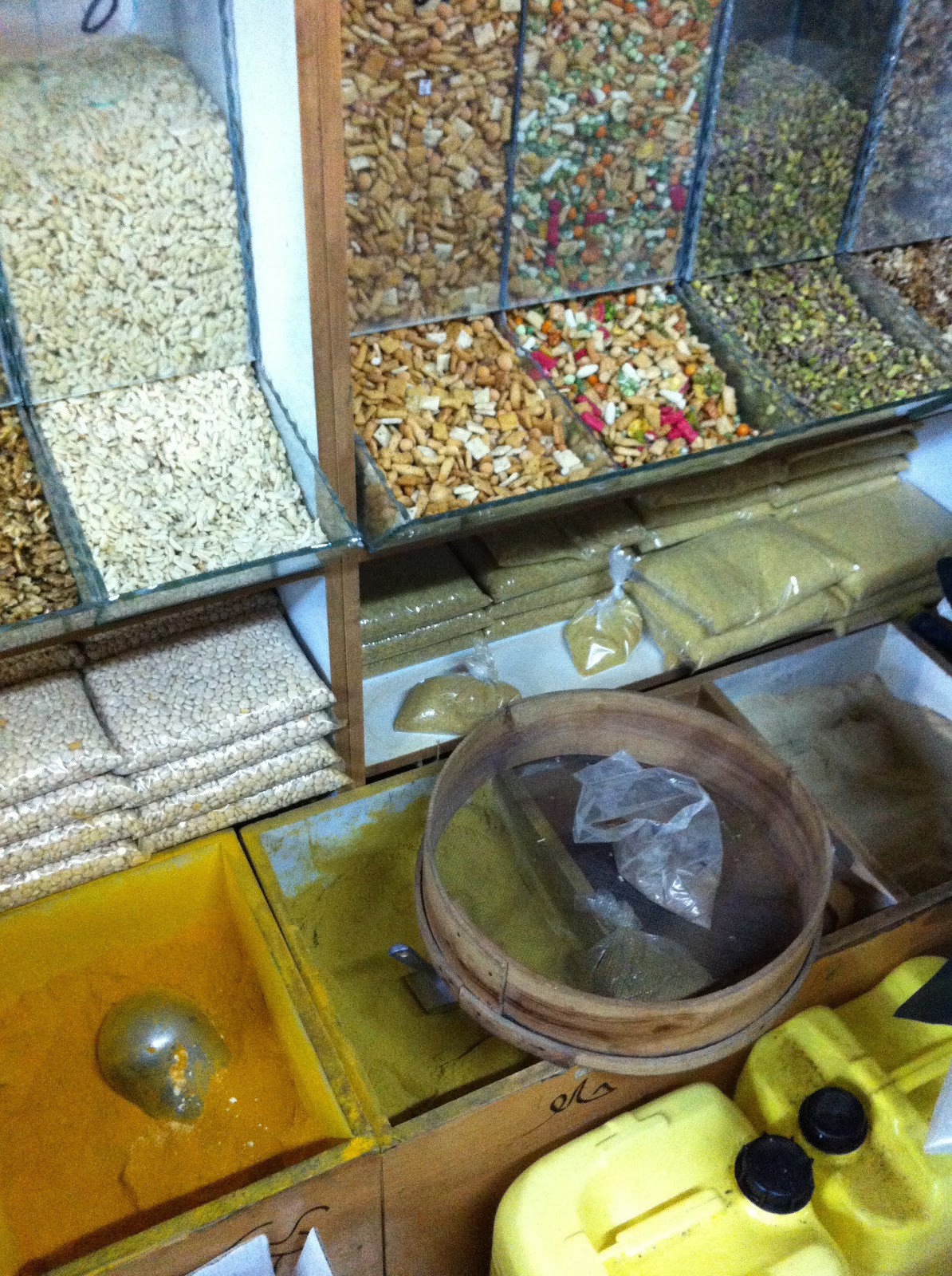
I'm engossed in high school theatre these days, trips to the gym for swimming, and getting jobs that require a completely different set of skills than I have employed the past year. In Palestine I would arrive home mentally exhausted after a day of fording language moats. Everywhere I went, I had to figure it out, or be left wanting. There was the local spice shop where I went to buy zataar--this wondrful mixture of thyme, sesame and wheat that we ate on pita bread with olive oil for breakfast, and which, with a small sip of sweet tea, set off a pop-rocky sensation dancing about our tongue. In this shop were no English-speakers to assist me through a purchase, though, so if I forgot the word in Arabic, I was left with a simple expression of need. 

Unhelpful in a room afume with spices, leafs, dried fruit, nuts and oils. 

But the young man who works there every day is friendly and understanding. He has a perpetual five o'clock shadow--a deep, dark one--and yellowing teeth. His eyes are large, but his iris is just as dark as his pupil. He has put on a bit of weight right around his midsection--not enough excercise and too much Maqluba, probably--but this is common for men who have to work ten hours a day in hopes of a wedding someday soon. His hands are thick and their tips are tie-dyed with the greens and golds of Arab spices. I ask for what it is I think I want, but he bags me a handful of da'a, or saffron, and I'm versed enough to know that what I really want is supposed to be deep green, not bright yellow. So I quickly gesture and apologize. Not that, not that...uh...I look around hoping to find what it is I am looking for; if I see it a point would break all barriers. But he's been through this before and suggests: zataar? 
Zataar in many forms
Na'am! Na'am! He knew what I was looking for and he smiles exposing his nicoteined teeth, empties the saffron back into the heep and scoops me some fresh zataar. Not an ounce of frustration does he display as he deals with my ignorance.
When I exited to the main street I would pass the furniture makers' workshop, which I honestly tried to avoid. However unreasonable of me, I would cross to the other side of the street to avoid being noticed. If it didn't work I would be beckoned in for tea and conversation. I could usually excuse myself from tea. Next time, marah jai, enshallah. But the conversation, a must. I would get questions I could understand (How are you? How is work?), and then a bunch I couldn't. These two men, one of whom was married to a Himony-so we're practically brothers-ask me all sorts of questions. I painstakingly listen for cues in tone and vocabulary I recognize. Many times we would reach some understanding of one another and smile, bless each other and move on. Sometimes I could tell that his smile was a bit pitious; he knew I hadn't understood.
The streetsweeper I'd pass next could speak English, but honestly, I tried to avoid him too. Saliva would collect in the corners of his large, cracked lips as he would tell me that he studied English in college and that it was his favorite subject and that he can also speak other languages, Oh yes, it was my favorite, my favorite subject. And you--you are Wisam. You live with the Himonys, yes--and then he would ask me if I knew Catherine, who also works at Amideast. I would answer yes every time and bless him and escape.
I was always such a Westerner on that street, but bless those men, it was just so exhausting to converse with them day after day. But my rouse would be dropped if I stepped into Ma'tam Malek, the 'restaurant king.' Here Abed worked tirelessly, waiting on tables laden with Arab spreads. His manager, Majde, spoke many English words and tried to convert me to Islam at every possible chance. It is with him I went and watched the slaughter of sheep at Eid al Adha (see blog post ...close your eyes). I enjoyed the company here, and it was less stressful in (mis)communication. 
Majde, me and Abed
In this restaurant the television is usually broadcasting the revolvings and pieties at the Qabba in Mecca. Majde is quite devout and would look up and greet me from out of his focused reading of the Qur'an. But one time I was in there watching that man attempt to break the world record for longest skydive. We sat around a table with vegetables, falafel and pita, hummus and tea stacked up and watched with excitement as he climbed higher and higher and higher. Our stomachs got tighter as the anticipation grew, but we continued eating and drinking to our full. There was laughter, grandiose conversation, wide eyes and even morbid predictions.  When he jumped we all breathed and awed and called over people who had momentarily stepped away. We shook our heads in disbelief as he fell like a meteor, felt disappointed that he pulled his parachute so early and applauded his safe, successful landing. There was a sense of envy toward such an exciting life, toward a man who escaped it all, even for such a brief moment. 
We all went on to our homes that night. I hadn't understood much more there than I had at the spice store, or the furniture workshop or on the street, but we had lived and laughed and ate together. That's good enough, really. Better, sometimes. 

Friday, January 25, 2013

…grieve with me


Can there be joy amidst such anguish? Can we say ‘bye’ and mean it? Or are we merely saying words to pass time and friendships?

Saying bye to the Danes
Abu Monsur
A Himony passed away a few days ago, one with whom I had shared sweet time and tea. His proud kuffiya was always worn in memory of the great Abu Omar, and he delighted insharing how ‘it wasn’t always like this’ through wrinkled expressions. He had a hut on the roof of the building in which I work and sometimes I would escape up there for a warm friendship. Now we remember these moments as we visit the Himony Hall, as is custom.

Here waves of men rise and fall to greet and console. Kisses are exchanged and young Himonys run around serving dates and black coffee. Faces resemble one another, not only in expression, but in structure and detail. They are cousins, somehow, if not siblings or offspring. Here we gather on Friday for lunch, much like we do for a wedding, however this time each Himony (except those immediately related to the man who passed) pay in order to cover the cost. As I was beckoned to eat, I saw Abu Majde pay for me; he treats me as a son. Earlier I had greeted him and he motioned for me to bring a chair so I could join him. I set it in front of him and the distant Himony he was sitting next to and plopped down. Harram! Of course. Why would I put my back to people in a set-up so clearly avoiding that? I guess that in my last days here there are still things to learn, then. How interesting it is that being able to see everyone around you is so important in these moments.

But it’s all a bit surreal because my grandmother passed too, yet I am so far away from it. I learn of it in electronic notes and digital updates. This isn’t normal. And it has heaved my departure backwards two weeks, so now, as I grieve a grandmother I said good-bye to months ago and an uncle I said hello to months ago, I look into the deepness of dawning departure. It feels like a constant twilight, no matter how oddly warm it is for winter.

In lieu of this separation I visited Nablus and Ramallah, two of the big cities in the West Bank. I woke up at 4:30 in the morning to hop into a truck with my friend Mostafa and joined him as he lugged some solar water heaters to Nablus. It was a seamless ride except for the blown-out tire, which took an hour to deal with. Oh, and the random Israeli inspection, which took us deep into a settlement in order to be weighed and interrogated. I sat quietly in the front seat. When the officers asked Mostafa why his friend wasn’t speaking to them he chuckled and told them I was an American. They eyed me and then told Mostafa it was his lucky day. He got away with a one-thousand shekel fine.


Nablus was beautiful and the famous kenafe held up to its reputation. Nablus hangs between two sizable mountains like a hammok, and its residents are sprawled up and around them. One of the mountains provides a phenomenal view of the city and Mostafa and I enjoyed taking some pictures from a good spot.

Ramallah is the closest thing to a big city in the West Bank with her tall-ish buildings. The city center has a nice theatre and I went into see a play brought down from Jenin (a city up north I didn’t get to see). Though I didn’t understand much of anything, it was nice.

To sit and drink tea with Khalilis
But every time I leave Khalil, my love for her is only intensified, this time by two young Khalilis on the serviece ride home. These shebab heckled me a bit, as is their wont with foreigners. They asked me where I was from, really, and what kind of passport I hold and tested the limits of my Arabic. And then, minutes later they were asleep on each other’s shoulders as two doves on a wire. I guess we have different definitions of ‘tough.’ Sofie and I looked back and couldn’t help smiling widely at the adorable couple and feel affection for them. Yeah, Nabulsis are cool, but they aren’t Khalili; Ramallah is nice, but it isn’t Khalil. So it is there where I am spending my last, quick hours, of course.

His namesake
The last night in Khalil I spent on the brink of Palestinian land and a Settlement. The light is sparser on the Arab left of the inkiness that marks the ‘no-man’s land’ (which is really, of course, some man’s land). I ate stuffed zucchini, drank tea and coffee, got a tour of the new floors being added, and spent quality time with my barber ‘Claws’ and his family. His dad works in the Old City, right next to the checkpoint and speaks decent English from behind his more-than decent mustache.

When I got back to my neighborhood I greeted my cousin, Abed, and told him of my unfortunate news; it comes as a surprise to everyone. He was actually angry at me for not giving him and his family time enough to feed me and sit to chat over coffee. Ah. Well, a cigarette is enough, then he decided and I accepted his offer and took a couple minutes with him to stand and chat over nicotine. In ways like this, though each as different as the relationship itself, I have been saying good bye to some of the people I love the most. I feel some rising tension in my esophagus, and I am sure it shall reach some focus of emotion and turn into a rising geyser.

But I’m going out with a bang. I parted with Abed and played billiards in a cloud of Hookah smoke with some of my best friends, Ihab, Noor (whom I’ve named Jag) and Mostafa who tell me how much they love me. When Jag found out I was leaving he responded “Well I’ve got to buy you something!” How Arab of him. He came over that night with a nice gift to remember him by: a piece of wood with a message carved into it. I embrace them, we kiss and bless one another, and then say until next time. I walk away warmed from love, cooling with distance.

And for my final day, the plan is to eat maqluba, the most Khalili of meals, at my first home with Abu Majde and his family. And then to begin the journey westward…

So, yeah, there is joy in these good-byes. Great joy. My heart is overwhelmed with love, my imprint on this place is satisfyingly noticeable, and the imprint of this place on me, satisfyingly permanent.

Abu Majde and I


Wednesday, December 19, 2012

…distinguish between the one


This is a land of collisions. For centuries it has housed the great crossroads of three entire continents, Europe, Asia and Africa, and still displays the tread from the wheels of ancient trade. Even ideas, entire religions, began and expanded from these sacred hills. Not without reason has Jerusalem been referred to as the center of the world.

A picture from Google of his final day

But there are many kinds of collisions in the Holy Land besides accidents of Pangea. There are the clashes between nationalities, where lives are at risk, and often taken. Last week Hebron suffered again the loss of a young man. In the excitement of not only his birthday, but also the twelfth day of the twelfth month of the twelfth year in this millennium, Mohammed, a newly seventeen-year-old was shot several times by a young Israeli soldier. The news reports conflict: was he shot 3 or 6 times? Was he holding a toy gun? Or was it his birthday cake? Was he hard of hearing or ignoring the soldier? As of yet, we are only sure of one thing: that the day of his birth has become the day of his death; this collision’s become so costly.

Tree's alit!
But some collisions aren’t always so, like the community of religions here, where Muslim and Christian live side-by-side, and worship similarly. In Bethlehem the toll of bells and call to prayer both color the air with hymn. I attended a large tree-lighting event in Manger Square, and in the middle of the mayor’s speech a loud call to prayer echoed from the tall mosque behind us. There we waited for the religious man to finish his duty before we continued our quite Christian tradition. In all of Palestine, the twenty-fifth is a holiday, as are the Muslim holy days, and well-wishing a ‘Merry Christmas’ is almost always returned with smiles. I spoke with my students about this brotherhood and was reminded of the sweetness in it from a shared story. One of my students works in Bethlehem and all his Christian colleagues fast at work with their Muslim friends during Ramadan. For many parts of the world, these two peoples cannot seem to live next to one another, but it is not so as they collide here.

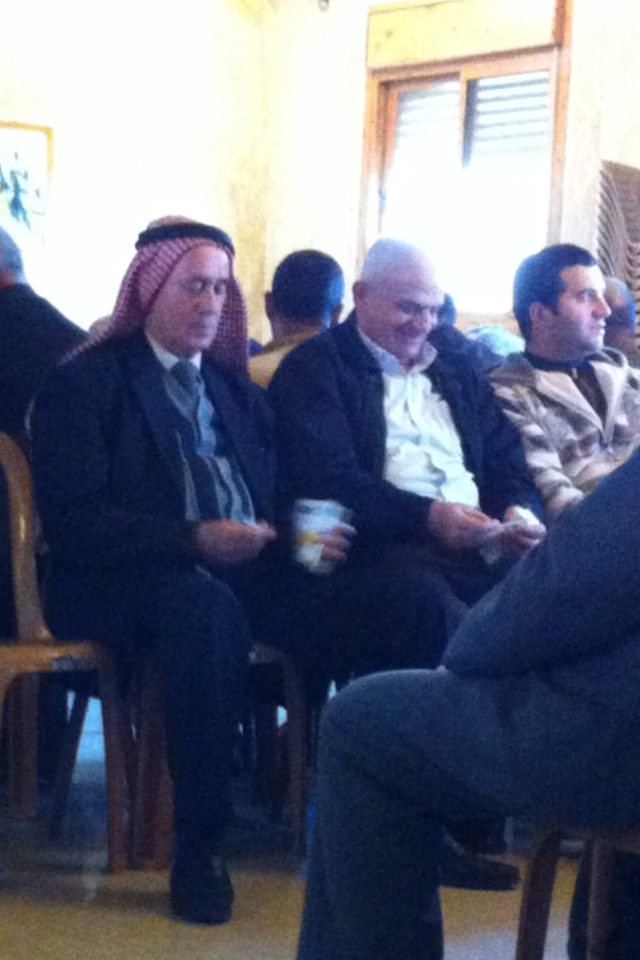
There is a collision of eras, where the contention between modern and ancient can be both humorous and frustrating. I’ve been to many celebrations of engagements, marriages or graduations, and they all look quite similar. There is a silliness of grown men and their sippy cups and juice boxes. With traditional headscarves they arrive from this age’s past; slurping juice, they come from their own. But it is normal here, as we sit and chat and shake hands in celebration of love. A man absentmindedly clinks his car keys and stares off into some remote memory of his own love-life. Others toke on their cigarettes. Still others use their cell phones to call over their friends from the other side of the hall. Past and present collide here like tides in transition.
 
Then an important man quiets the crowd and begins the prayerspeak, where Allah and Islam are celebrated first, the marriage second, the families third and Allah again while they open their palms face up and pray. In tight jeans, leather jackets and waxed hair or long robes and beards, they all simultaneously lift up their hands, then bring their palms down over their face to seal the prayer. I sit quietly and make note of the people who wonder who I am and why I’m not joining.

For these traditions are deeply rooted in both culture and religion, and are not frequently ignored. And it has been that way for so long, but with smart phones in hand, a connection with the West has been tied, and where once the negative influence of the modernizing West was successfully quelled, now it is united with one of those knots tied by the ignorant that never undo. Hence the contention. I see the frustration in the eyes of young men who wish so badly to have a girl at their side, but know it is actually impossible outside of an expensive, almost unattainable and altogether too permanent marriage. In fact, their despair is quite the focus of their days, for its forbiddenness makes it consuming. And so we find ourselves here, celebrating yet another young man’s ‘ultimate’ success. And the man with his keys thinks of the woman he loved but couldn’t marry while my friends think of the girl they know they’ll never even kiss, and look at me with a certain envy for not being governed by the same social rules. But we snap out of it to join in a more immediately satisfying tradition: to chow on some incarnate pastry, both fully dough and fully sugar…

Likewise, as Christmas draws near I think of one more collision, one I see within my very self: the coalescence of what I was and am, and what I’m becoming and have become.

I was at church the Sunday after the UN’s validation of the Palestinian State and I was wearing my kuffiya for both warmth and in pride. There a man greeted me, kissed me and looked at the scarf.

Love the Kuffiya
“Ah, now you are Palestinian” he said. I smiled and thought for a moment about how I must be if I just accepted a kiss from a grown man. And then I looked back at him and replied,

“And now you as well, my friend”

But it isn’t just the scarf that makes me Palestinian, just as one vote doesn’t change who these people really are. No, the fact that I am becoming Palestinian was most notable a few days after Thanksgiving when I was eating some leftovers at home. Here people seem to eat pita bread with everything: breakfast, lunch, dinner, vegetables, meat, other carbs, hummus, everything. And I like to think that I haven’t adopted this habit, if only for the health reasons, but then I look down and realize I’m using it to eat stuffing. Stuffing. I was stuffing pita bread with pita bread. And eating it. What have I become?

But it doesn’t rest there. Even walking arm-in-arm seems natural, like I’ve been doing it my whole life. Once I absentmindedly stuck my arm in the elbow-crick of my American friend before we both made weird eye-contact and separated. On the rare occasion that I see a foreigner walk by, I stare, wide-eyed, as if I’m at the zoo, with the question why? on my lips, before I’m caught by a Khalili for being so, well, Khalili.

 
I remember the first word I ever learned here: habibi. It means something like ‘my lover,’ but is used for so much more. It has a certain flexibility among the Palestinians, but a subtle one found in how you say it. You can look at your wife and say Habibi. It’s like any other term of endearment: you say it with earnestness. Easy. Then you can see your good friend and greet him. Habibi! You hit the ‘H’ a bit harder in this one, and drag the rest of the word out a bit. It becomes endearing and affectionate. Not too hard. Well, then you can run into a stranger and ask him to take your picture, or something. Bidi ishi. I need something. Habibi. This one comes after a few words have been exchanged and he is ready to take your picture. Or something. His payment: being addressed as such. It isn’t rocket-science, but it requires a bit more finesse. But then you can use it to say thank you. Down the street and to the left? Habibi. This time it flies out quickly, like we might say ‘thanks.’ If you want, you can even use it with hints of sarcasm to mean the opposite. Habibi. I don’t like you. Please leave. I, of course, have no need to ever use it this way. But perhaps the most exclusively native way of using it is in accepting a complement while simultaneously saying you’re welcome.

I was speaking to someone the other day and he called me his Maine Man for the help I was providing him, and, of course, the place from which I come. Then he complemented my work. My immediate and completely natural response: Habibi.

We paused for a moment and looked at each other. Then, on the brink of continuing our conversation, we were interrupted by our own simultaneous laughter. It was really funny and we didn’t need to say anything for we both understood. “You know,” he said to the others in the office, “his habibi is, like, perfect.” My response of course: habibi.

But this collision of identity, this coalescence of two-in-one, draws me back to the message in the music I so nostalgically listen to these days. It is what we are celebrating now, both in the West and here, where it all began. It is Him, a man of two identities. Despite what you believe or the traditions you practice, Christmas is about a being who was God and still is, and is becoming and has become a man. But our focus lies not just in his birth, for we celebrate a man who was born to die, and so my thoughts drift back to our late friend Mohammed, and I feel a certain sorrow in such a collision of fate as theirs. 

Wednesday, November 28, 2012

...be thankful


You all saw it on the news: Gaza and Israel at it again. And many of you sent quick notes to me, checking in on how I was. I appreciated that. It was a strange night, when it all began. I was in Jaffa, a city just south of Tel Aviv, when we first heard the rumors of war. My friends David, who left for America a couple of days later, and Ditte and Sofie, the Danes, were all dressed up and going to see the new Bond movie, Skyfall. At dinner we chuckled uneasily about the all-too appropriate title to that movie.

Tel aviv, from Jaffa
The next night was interrupted by tremors of war as rockets missed their mark, or sputtered out early, and landed in the Mediterranean nearby. We thought we might go dancing, but the mood sort of died amidst the already-growing suffering.

The week passed like a fitful night of sleep. Even the weather groaned and tossed and turned…nothing was at ease. Every day we counted the fresh graves with solemn souls. At night I heard the firing of gas or sound or light grenades as people threw stones at Israeli soldiers, and they responded. The unrest has stretched into the West Bank and many people joined Gaza by strike, by stone, or by prayer. 

Imagine the honking
The greatest of all the shocks in Hebron was not from a stray missile, though. No, we were hit hardest and closest when one of our own was shot and killed in the street, amongst his brothers. The pictures and phone-recorded clips found their way to YouTube and Facebook instantaneously; I saw grief I have never known, blood I’ve never seen shed, and it sunk heavy as stone in my heart. This was no news reel—this was a friend of a friend who lived down the street. I could have seen him, perhaps purchased something from him. His hands were Khalili, as are mine, and as I type this, I know he never will. The grief was overwhelming, and it carried him through the street the next day, held aloft, proudly, in a bed of wood and covered by the colors of Palestine, black, white, green, and red. Here is our martyr.

Two days later I sat atop a high place in Hebron and overlooked the hills in the shadow of war and approaching night. Lights shivered in the distance: that was Gaza. A flare in the darkness was no celebratory firework, but a presage of grief. I found myself in a coffee shop later, joined by foreigners and Palestinians alike. We wondered with shaded hearts what tomorrow would bring. That a ceasefire was being discussed behind doors where lives are saved and wasted, we knew; that the ceasefire may not work, we feared. As we looked out to the street and watched the parade of honking fury pass below, we acknowledged that our time in Hebron might be cut short. We looked at our Palestinian friends who sat among us, whose hospitality we had so generously been recipients of, whose love for one another bled even for us, who had known them for so little. Could we leave? Must we?  

We will if we must.


The anxious gathering
And with that we saw to our homes for another tormented night.

I woke up on Thursday to a strangely golden room. There was an afternoon’s light bursting into my room and I fumbled for my watch to answer a question I knew to be impossible: was it still morning? It was. I ventured into my kitchen and looked out the window. Away in front of me a tall mosque thrust itself into a sky so golden and overcast I felt uneasy. There was something apocalyptic about it and without internet or television to inform me, I feared the worst. But I had to prepare a pancake breakfast for the Danes and my two roommates, as promised.

I noticed something, here. In all this turmoil I saw many people who fought, many who cried, and many who stood, stone statues of old kings besieged, but untoppled by breaking crests. And in every moment I only thought about food. The day before I had kept my friend company, making pancakes to fill her worrying mind and body. I prepared coffee and small snacks for my roommates, and in doing so, I suppose I felt human in something that can confuse even that foundation. 

My roommates creaked out of bed slowly, with joints unoiled, and Ditte and Sofie arrived while I built an impressive stack. The girls have internet at their place and so were bearers of great news. Besides the fact that Ditte had all week been in Jaffa, alone, and had just arrived yesterday in Hebron, the ceasefire was successful. We celebrated over starch and brown sugar, and it was a Dane that first said ‘Happy Thanksgiving!’ And so it was.

The sun came out in full glory that day, and most of the morning and afternoon was spent joyfully doing errands. I had planned to prepare a traditional meal for some of my friends here, but the whole conflict had closed roads and checkpoints and raised tensions in many places, including Jerusalem, where I needed to go to purchase some important ingredients. Now, with rocketless skies, I made the trip into the holy capitol. I was looking for one rumored store in a place called Beit Hanina that apparently sold pumpkin puree and who knows what else. But I had no idea where it was, except that a stop on the train in Jerusalem was called Beit Hanina.

A half an hour of walking after I got off the city train I finally found Jafar Supermarket. I was in an Arab town between Jerusalem and Ramallah at this point. Two hours prior I had left Hebron, and when I didn’t find pumpkin puree there, a flicker of frustration caught flame. But I found sweet potatoes and butternut squash instead, so I grabbed some with my other groceries. However nice this small market was, I grumbled for I could have bought these things most anywhere in Jerusalem at least. So I started my trudge back, but I had scored little that I came for, and I was still turkey-less. I had thirty minutes of walking and I knew I had passed a couple butcher shops on my way. I walked into the first one.

Salaam alaykum. Ainduk deek rumi? 
              (Peace be upon you. Do you have turkey?)

La. Djej, bas. (No. Only chicken)

Ah. Shukrahn. Yatik Allafiya. Salaam. 
              (Ah. Thanks. God bless you. Peace.)

Shop number two was the same, but third times the charm, as they say, and soon I was on my way with the smallest turkey they had: a 20 pound doozie. I actually called a friend of mine to get a second opinion. Was I really about to purchase a toddler of a turkey and attempt to cook it? And they sell by the kilo: this was no cheap steak. She cleared my head with strong affirmatives, and so I paid and left, heavy laden with a long road ahead.

The Danes had joked earlier that I should buy the turkey in Jerusalem and travel home with this frozen hunk of meat under my arm. I wasn’t laughing as their premonition became all-too true. I initially had a frisson of excitement, but soon my breath swam away in front of me as my arms ached for breaks they could not have. My legs stung and my left shoe began to dig away at my Achilles. I made it back to the train and knew the walking was over. But it was not. In less than a short hour I was standing by the road outside of Bethlehem wondering where all the shared taxis were in this fallen darkness. At this point I did not laugh, but sneered inside at the fact that my groceries had depleted all my cash save barely enough to get home. I couldn’t afford a taxi from here. I looked away down a dimly lit road where I knew I could be led to the main street in Bethlehem. The problem was, it was a few miles down that road. But twenty minutes of thawing turkey made up my mind and I started off. The familiar aches, stings and groans of my body quickly resurfaced and I found myself whimpering in pity.

She finally made it home. Subsequently, she lost her head.
But on I walked motivated by some apparition of a brown turkey before wide eyes that I had conjured, and I was determined to see it through. I revisited every prideful act I ever committed those miles of the night, and was strangely strengthened by them. I would see this bird to the stove, and my spent arms couldn’t wail loud enough to stop me.

I had been 5 hours from Hebron by the time I reached the main street, and I could only pitifully deplore this white man who stumbled out of the darkness with full bags into the usual going-ons of the neighborhood. It was some divine gift that brought me a car less than ten minutes later. The driver recognized me, and took me to Hebron and the whole way I sat in the back, on brand new leather seats, fearfully cradling the dripping turkey in my lap. I reminded myself that it was thanksgiving, and so I counted things I was happy for. A ride. A turkey. Absorbent jeans. When I finally got out of the car, I looked as if I had wet myself, but I saw no gleam on the seat. Alhamdulillah. Thank God.

Palestinians with Pies
The day ended weeks after it began. I had done some surgery on the bird, disrobed her, spiced her, and tacked her skin back on before putting her in the fridge. Then I walked home and fell into sleep. And the night ended only minutes after it began. Soon I was back at the Danes’ place, improvising some pita bread stuffing, and getting the bird a-cooking by ten-thirty. I had never done any of this before, but I felt confident…for some reason. I spent the entire day cooking and preparing. The stuffed turkey was in the oven, the potatoes were ready to be mashed, the pecan pie and butternut squash pie were ready to go in once the bird was out, vegetables were cut for roastin, the cans of cranberry sauce eager to be opened and served, salads on the verge of being thrown together, flour out and ready to become gravy in her marriage to turkey juice, and then it all happened; the puzzle began to take sudden form. 
Though it was all a bit impetuous I was proud of the table that was laden. Two Danes, two Aussies, two Palestinians and I all sat down and feasted. Only two of us had ever known this meal before. Even the Arabs kind of liked it, and they are not known for their tolerance of different foods.

And with a bit of wine in me, and the merriment of company filling all the spaces within me not already occupied by tender meat and perfect pies, I slept well on the couch, and I was quite thankful. We had all agreed at the table: this was one to remember, with Gaza quiet, the air still, and hearts and stomachs full. Happy Thanksgiving, we said. And indeed, it was.


Oh, he beems with pride

Saturday, October 27, 2012

…close your eyes


Warning: the last half of this blog contains no graphic images save ones captured by my words. A bloody holiday has gone by, and I mean no joke in my title. If you’d rather not read of this, stop when you see Eid al-Adha.

I woke up to the goose grumbling yesterday morning and the rooster’s competitive call, though I had wanted to catch up on some sleep. And I was a bit peeved so I closed my eyes and allowed myself to wander into daydreams of roasted goose and rooster cordon bleu. I decided, though, as I parted the covers and embraced a blast of crisp, cold air, that I should not be so upset. Perhaps the fowl aren’t nuisances, I think, but alarm clocks, and just have annoyance wrapped into their function. It was time to get up anyway.

This perspective change settled my fury enough for me to rise and stumble into my kitchen, hungrier for meat than is usual for that time of day. And as I slipped on my slippers, I realized there is much in my life I’ve changed perspective on. Many things surround me whose functions have been…redefined, for my slippers aren’t slippers at all, really. I didn’t bring real slippers with me, but my cement floors are vacuums of heat, so, my L.L.Bean boat shoes with my L.L.Bean socks have become, together, my L.L.Bean slippers. If I close my eyes, they feel about the same.

I go to put on a sweatshirt, but approach no dresser. Instead discarded cardboard boxes for tea, fruit and some other Israeli product sit on the floor, drawers for clothes. One has my shirts, another pants and snuggies, and still another sweaters and flannels.

After I make my coffee (this is real, though Arab, not filter) I head back to my room to climb back into bed for a morning in Middle Earth. I am greeted by hanging vines from window to window that display laundry instead of leaves and flowers, whose scent is soapy, sometimes musty. It makes my thin-walled rooms strangely cavernous when the cold creeps in undeterred, like the heart of Misty Mountains whence the Ring was found (which makes me Gollum, wide-eyed, riddling, fingering my preciousss. Sounds about right.).


Next to my head an upturned drawer becomes a long bedside shelf. Here my coffee perches, as do my collection of books. I don’t actually want this shelf here, because it messes with the spatial arrangement in my near-empty room, but with one outlet five feet off the floor by the exit, it is a matter of practicality: this shelf also supports charging cell phones and computers and razors.

And though I have surround sound (which is a stretch for the noise of these wild children), I have no television or internet, and entertainment is defined by the words of authors. But I think I’d rather have it this way. Coffeeshops with wifi are my transitory offices for e-mail, Skype and an occasional catch-up on some American TV.

When I find a good stopping point in my book, encouraged by a break in text or a call from nature, I get up and use the facilities. Often the water is short, and sputters when I summon her. It’s a good thing I have an Arabic toilet to use when flushing is denied me. Oh, my porcelain pit that opens to sewage, the child of holes and thrones, that proves useful, though pungent. This isn’t so much a change in function as a change within that motivates me to use it.

All of these things can make one feel “not-at-home,” and for me, the feeling of home is important. So I have been purchasing things that make life slightly homier: cooking utensils and even a pan, a knife for cutting and a bowl for rice. I have a couch-ish thing to sit on and a Palestinian flag serves as a light-shade.  And since it was the eve of Eid al-Adha, one of two important Muslim holidays, I had someone over for dinner and we ate on my small cardboard table with plastic-bag cover.

High sun on Eid al-Adha
Eid al-Adha is the holiday where the Muslims remember their father Abraham, who was willing to sacrifice his son when God asked him to. In their version of this shared story, the knife remains powerless to cut Ishmael’s neck, and a replacement ram was provided. The Muslim world celebrates this provision (for by it they live) by similarly sacrificing a ram in remembrance, and even in atonement. I have spoken with some of my English-speaking friends who say this replacement sacrifice can erase the owner and his family’s bad deeds. What it also means is that there is a dramatic swell in business at the slaughterhouses and butcher shops. Of this, I went to see.

I connected with a friend of mine at seven in the morning after an earlier-than-usual mosque service. We went and retrieved his family’s sacrifice, a milk-chocolatey ram with short, curling horns, and milky streaks. An apple was brought to encourage the ram’s cooperation, but he didn’t bite; he sensed danger.

We got him to the butcher shop and here the air was soused with the smell of dam (blood). My heart twinged at the thought that our ram could smell it too, but no one seemed to be similarly concerned. We caught the first wave of slaughters, standing in that shop and I held the rams head between my thighs to block out as much sensory input as I could.  Again we tried to get him to eat the apple, but it was no surprise when he turned it down. Soon we relocated him to the pen full of those on death row, and let him forget what he had seen and smelt. Many of the sheep seemed to have that bland look about them as they walked in circles sniffing one another like dogs. Perhaps I was seeing more than was real, that my open eyes deceived me, but our ram behaved unlike the others. Perhaps he had seen too much, for he had a calm not of naivety, but of peril, and he was driving himself slowly as far away from the door that led to the blade as he could.

Inevitably, his quest was fruitless, but I will speak of the process in general, not locating the affliction onto our ram, though I watched as he was led through every step.

A sheep is dragged, bleating and resisting, onto the bloody tile where carcasses lay, twitch and kick. I have recognized only two expressions in the empty eyes of these simpler animals thus far: calm and fear, but as he finds himself on his back, sopping up the blood of his kin, his head raised and knife at his neck, I see for one brief moment something deeply pitiable. He looks at me in absolute terror, though this is not a terror of what might be, but what is to come. He has a knowing terror that breaches the limits of his reason, and here, just before the butcher swipes, the sheep’s eyes become piercingly sharp, dark, like winternight, and then in a blink, they fade into a grey, empty dusk.

I couldn’t tell where life ended and death began; here there is a moment of passing, where some try in ignorance to get back on their feet and escape, only to collapse into gruesome knowledge.

The ones who cry out are the hardest to see go, but each one’s throat is gaped open, their breath immediately rasped and barbed, and their dam joins the sea around us. Perhaps the most graphic part of the process occurs as the twitching and flopping begins, which can continue for what seems like far too long. Thunderous thuds echo as hinged heads hit the floor and the spatter of bloodrain follows as legs involuntarily kick. As I tried to hide our ram from this sight an hour before, I was hit with this fleshy precipitation. The whole place reeked, as deep red rivers found drains and wide-eyes and slacked jaws stared at me in horror from mounds of matted wool. In movies people are beheaded with such grace, if I may use that word so irreverently, and William Wallace’s lover greets this kind of death with a calm sadness. I wonder how terrible it really was to have lived under the shadow of the guillotine.

A calm descends, though, as the sacrifices finally still. Some men congratulate each other and seal the moment with some coffee. Today everyone wears their best clothes, and often their brand new ones, as is tradition to receive for Eid, and it proves to be a strange sight: bloodfloor under the feet of suits and ties and children watching the grisly affair. They wait for the skinning, cleaning and partitioning now, half for their family, half for the poor, and the butchers do this with skill and ease. Some pull a carcass aside and begin, while some open a whole in the leg and pump air between organ and skin, bloating the goat. And as the knife makes slits and the balloon deflates, he lays there awkwardly obese, sagging and limp.

I saw enough; I needed to go home and throw my clothes in the washing machine. I said farewell and blessed my friends, then averted my eyes from what I came to see, and left with a fuller meaning of what a sacrifice really is weighing on my mind, and the images behind the lids of my closed eyes.

Tuesday, October 16, 2012

...eat with your fingers


Among the Himony’s, and even elsewhere in al Khalil, I am somewhat of a celebrity. This is, of course, only because I am a foreigner (and not because I am a desperately humorous, relationally warm cultural changeling. Who? Me? Go on…). But, really. What this means is that I am always in the limelight, and my dear sirs and misses, that is quite stressful. Under the spot I am expected to talk, to understand, to eat, drink and be merry (for tomorrow we die), and to always wear my sixteen-dollar smile. But let’s be honest, sometimes I want to pout, mope and be gloomy (for tomorrow we wake up to the same damn goose, honking it’s beak-horn inches outside my window).
The party crowd

But there was a week I disappeared, though I cannot say I was pleased about it.

See, the seasons have changed and I find myself even cold sometimes. Yes, cold. The drama of it all gave me the flu, actually. Shukran, my dear Mother Nature, for lovely days of headaches, muscle pain and busy, exhausting dreams that stitched together ugly nights. Good thing I had Middle Earth, with her tales of dragons and great, big spiders and great, small hobbits, to have spent my many dreary hours in (while also dreaming of eating the goose that barked my sleep into exhaustion).

But finally the cold sweats passed, and now my skull is no longer host to a small war. I can look at this computer screen and type without my eyes turning into subwoofers. Yaaeeey…
Blurry but enthusiastic. Old and young dancing.

Fall brings more than influenza, though. It brings earwigs! Uhhh…And a wedding! Much betterrr… This wedding was quaint and not as big as the first one I went to. Something about that thing was epic; this was more modest. The dancing was fun, the crowd smaller, the event shorter. We ate our small meal at the end of the ruckus and let the next day happen.

I haven’t yet mentioned that the young man who got married is my Arab brother, Ibrahim. So this time I got to be a part of the three-day affair; I got to help. Day two came and I rose early to join my family in the preparations for the big lunch they were to provide. The large hall we were in, owned by the Himony family and used for events like these, needed a cleaning. The night before hundreds of men had sat in chairs drinking coffee, tamir (sweet date juice) and eating sweets after congratulating the groom and his family. Spilt liquids, candy-wrappers and cigarette butts carpeted the concrete. So we flooded, scrubbed and squeegee’d it, leaving it shiny and ready for tables and chairs, chairs, chairs.

Me dancing with a young Himony
But we finished early and had some time to sit and rest, though the kitchen crew was working hard to prepare the food (as they were doing when we arrived this morning). I took to cutting pita bread into fourths and then preparing plastic bowls for the hoards of men that began to arrive after morning prayers, around noon.

Here is the process from pot to plate: Oily, salty, unbearably tasty mass-roasted almonds get sprinkled into plastic bowls. These bowls get filled with rice from a pot the size of a small tub and flipped onto a plate. The bowl is removed and a beautiful almond-capped rice-mountain stands, awaiting a hunk of lamb meat. When they are married (till teeth do them part) they head to ever-flipping tables and chairs to be et by friends and family. When satisfied and gone, plates return to the kitchen, get cleared, washed and reused. After all, we are feeding upwards of two thousand people (did I forget to mention that? Well it’s true. 2000. Two-thousand). Did I also forget to mention that everything is done with fingers?
Preparing the meal

 UnSANitaryyy! (That’s meant to be sung)

I spent the morning in the kitchen jumping between tasks: putting almonds into bowls or being the rice man (so fun) or passing the rice man empty bowls. And all was done with really greasy hands.

After the men ate the women came, around two. There are fewer of them and its all a bit less-rushed. We were able to prep many of the plates before hand, and barely needed to prepare any more after that. Then I moved on to do the dishes. For like, six centuries.

Meanwhile, some ladies remained chatting in the dining room, though the men had long-since disappeared. There is a tradition here where the groom’s close friends take him home, strip him down to his skivvies, wash him and give him a good shave (earlier they partook in the tradition of feeding him with their fingers. Remember, lamb and rice. It was messy, but smiley). I would have enjoyed experiencing the groom-grooming, but there are many things that require better Arabic to anticipate, so I missed it while in the kitchen. I was present, however, for the rest of the evening, albeit dirty and splattered. A great host of Himony men went to the family of the bride’s neighborhood, and once again sat down and drank shockingly sweet coffee and, from what I can gather, exchanged blessings. Then the bride, Raghada, got into the car with Ibrahim and away we went, a honking, screeching parade, until we made it to a wedding hall.

This hall hosted the women who, with dresses and make-up I only hear tales about, watch each other dance and eat cake and sit and gab. Outside the hall, impromptu music would spring up, hearts warm with enthusiasm, and a circle would emerge in the center of a crowd. Dancing would spark, as would some sneaky fireworks, and Himony men would be hoisted onto shoulders and celebrated. In between these jolts of joviality we stood around, chatted, waited, or ran into the small store to buy a snack. Mostly, though, cigarettes were smoked.

I admit, I didn’t have the stamina to keep going, though. After leaving the shelter of the kitchen I had, once again, garnered altogether too much attention, and my brain was too tired to keep translating. I had been on my feet since that morning, about 10 hours earlier, and hadn’t had a chance to freshen up. Plus the twerps, as I affectionately call the boys who find it their duty to be parasites around me, were being extra twerpy (or maybe my fuse was just a bit shorter). Either way, I found someone to drive me home, and I was never happier to see it.

I was blessed to have been a part of the wedding-machine, to work with my hands, to do something half-way rigorous, and to be out of the limelight a bit more than usual (and not because of my health deciding to run off and dance with Hades for a week). But it is inescapable (the limelight, that is). I wasn’t unhappy, though, to have been left behind at lunch with the women. I poked my head out of the kitchen and was beckoned forward for hearty, breasty chuckles about my relation to the family. These women, with their splintered faces, smiled matronly at me while in the peripheral I saw the younger ones lean in to whisper to each other and giggle. I’m sure they were mentioning my blonde hair and great, Caucasian features. Well, probably not, but I was offered a Khalili wife again, and I thanked the women and said Insha’allah, and then remarked about how expensive weddings were, with shock in my eyes.

But the truth is I don’t want a Khalili wedding. Not now. Sometimes I’d rather just be in the kitchen with oily hands than out there in the limelight. The wonder of being a foreigner has its stresses.

Thursday, September 27, 2012

…catch a leaf


It has been busy, I have been quiet, the blog remains untouched by any. Wild things can change the course of one man, a leaf in the wind fearing the impact and finality of the grass, his grave, and the unknown cold emptiness of atmosphere, unable to choose in which he’d rather bed.

Teaching continues; she is the course that runs sure. No, that’s not it. Streams change when trees fall or stones roll into their paths…Teaching is a waterfall where rocks, fish, trees, hydrogen-dioxide have no choice but to plummet, violent in nature, but peaceful in method. Students thunder into class, absorb, try, extend, leave, still water but impacted by the fall. There is comfort in this vehement routine. It is all else here that is different, even opposite: peaceful in nature, but violent in method, the stone that rolls into the stream. At once it is sturdy, unchanging, calm. A flick of the eyes to a passing songbird or a fox on the prowl and you suddenly see the stone differently (did it move? change shape?) for its power, dormant kineticism, preying for destruction:

I go to buy a gas burner, I look for life’s necessities, I find myself accused of theft and robbed of prior pieties. The rumor rolled into my stream, and stuck itself in the mud. How common this act of necessity was, and yet, how disruptive it’s become. But I’ve kept moving, flowing and soon I trust that it will dislodge, only to leave the bank quite different than it had been.

Some belongings have been sitting in my apartment, their owner a previous tenant or two who seem to have forgotten. But today a gentle rap on my metal door, once opened, revealed the young hand of a slender woman. I let her in, but left the door ajar. The prodigal daughter came and collected her things with smiling nostalgia. As the transaction ended, for that’s all it was, a passing, two winds, or just one and the wood, with the door left open for all to observe (and they did, all of the children who live around me in this hive, buzzing curiously into my empty cement cell), she waved and parted, bearing her new-old burden.

But the bees stayed and they asked me if I was afraid of God, which I’ve been asked before and still don’t know how to answer. Do they mean merely that I know God is powerful, that I should fear him in my love for him? Or do they mean, as I think they do and are taught, that one should be afraid of God, and should pray to appease him after offense? This was the course of action I was strongly advised to take after choosing my response: No, I am not afraid. With a simultaneous, seemingly rehearsed gasp, they leaned back, forced by the blast of blasphemy in my words, and I went from neighbor to infidel.

I blessed them good-bye and sank into my room where their atavistic noises surrounded once again. Children, so peaceful when tucked in, so innocent of worries to come as they tie string to twigs to plastic and call it a kite, so angry and raw, bearing milkteeth in disgust.

And Tim leaves too, in a month, to ingest the New England autumn like apple crisp and cranberry sauce. The quietness I’ll know will be a cacophony of absence. So I’ll pick up more classes and keep myself busy.

But busy-ness doesn’t mean absent-ness, though I find myself on the stoop less often, my passing breezy and quick, neither warm to notice, nor cold to hunch in. An autumn lull has settled here, and common living rooms have lost their detail in my mental frames.

Fall only exists in evening, summer reigns all day. Winter peeks in the stripes of night that descend as does the sun, but her pale face has yet to emerge from her sneaky, mischievous hibernation. I grow enamored with the language as she becomes familiar, and conversations are had where we dip into each other’s tongue and taste what we think we know and ask about what we’ve never had.

And meanwhile I soothe something within or around or holistic with the differently familiar sounds of the Mumford & Sons new album; sometimes I read or sit or pray or do push-ups. As I make coffee on the burner I bought to calm my accusers’ pointed fingers, I catch up on world news that I downloaded onto my phone the day before and wonder how Morsi or Hadi’s trip to the UN will be received and if Palestine will get her borders, if Obama will listen or if Romney will rise, or if Ahmadinejad will ever put his foot in his mouth or even use it to step down next year…and my thoughts drift, papery, colorful.

I suppose I choose the grass, I say to the wind. Though final, it’s steady. I want Niagra; though brutal, it’s sure. Not the sweet, calm atmosphere that will change in an instant and thin in oxygen and loose its hold on you then gently drop you off into space where the last thing you see is the smile of the moon before asteroids and a once-planet become silhouettes by a dim star and Hubble catches sight of you causing scientists to wonder What is that? and you’re classified as UFO in science books that gather dust on the shelves of libraries.

And its what I’m getting in the Arab Autumn where crispness lacks in air and stove, but heat exists in both, and tumbling over waterfalls seems a bit dramatic as I lay in the grass and look up at stars. Who knows who’s up there, and down here in books.