Showing posts with label arabic. Show all posts

Friday, August 16, 2013

...see what happens

I was standing on the side of a street somewhere in this web of a giant city. I had all my earthly possessions in two bags, a backpack and a duffle. I looked up and down the street waiting for a taxi to somewhere and took a moment to chuckle at how I even got here.


I had been to Amman once before on a short trip to renew my tourist visa in Israel. Then too I had been charmed, perhaps bewildered, by her size. On and on she spreads, hardly a five-story building anywhere, or so it seems when you look out over the city from a high point. In the yellowy purple of a hazy twilight she twinkles like gold dust and at night the lights of dinnertime or ongoing business shine out from their place like stars in the heavens, and so they seem as far away too. At any point I was surrounded by the city as far as I could see and I felt it a bit eternal and I a bit lost and where was the edge of time and space anyway? Getting from place to place we are shuttled in taxis, but this is an expensive endeavor. The buses are so much cheaper, but you trade price for a far-longer trip. And a good walk after you disembark.


But this time I am not here to renew a visa, but in punishment for even trying to get one.


On Wednesday the 7th I flew into Amman, paid for a week-long visa, and took a bus and a shared taxi to the Jordanian border control. Everything was going all-too smoothly. It was a great pleasure to speak Arabic again, though, and I figured my familiarity with the language and culture was helping things run along well. But that all changed quickly.


The process is extensive and expensive. I paid for the visa, then the bus ride, then the shared taxi. At the border control center there is an exit tax I didn't have to pay, but I did pay for the ticket to the bus which transports us over the River Jordan to Israeli customs and for my one piece of luggage I was forced to store below. My anxiety grew as we inched forward; I knew what was coming. Approaching Israel is always stressful. Perhaps I should have been confident, for I had been through this many times, and it is never pleasant, but always eventually over. But we sat and sat and waited and moved forward and stopped and waited and turned two kilometers into an hour of shortness of breath and not enough room and restless hands. When we finally got off the bus, I took a deep breath and gave some thought to the insanity of anxiety. Was I overreacting to a day full of travel or did I know things were not going to go well? And why has Israel become a nation unmarked by blessing, anyway?


My last trip to Jordan
It took four and a half minutes to get summoned by a pectoral, automatic-rifle boasting, scruff. I was pulled out of line and taken into detention number one. I had some extra screening to go through and I guarantee my beard had something to do with it, but I got to skip ahead of a long line at least. After one round of check up I was allowed to go to the passport checkers. I have never once made it through these unscathed. This time was to be no exception. And so I found myself in detention again, this time with many other men and women. We began chatting, laughing at how ridiculous it all was and sharing stories about Jordan, Israel and Palestine. Two Muslim sisters were there. One was married to a tall American who got his stamp with no problem, though she and her sister sat for four hours before were given access into the country. And her husband sat there too and we laughed together. A half British half Tanzanian man had been there for over six hours by the time we arrived. He couldn't speak much Arabic, wasn't an Arab or a Muslim, but he could have passed for one. He was repeatedly taken away and each time he returned with a goofy smile on his face. In that formal way Brits speak he said,

"They keep speaking to me in Arabic, and I say every time that I am not an Arab nor do I know much Arabic." We all join in on the joke, our only power in this situation, which we cling to to feel less like cattle. We look around and find not one officer or employee older than thirty. The uniformed men and women look pubescent and we shudder at how Maoist it seems to have the decisions of entry and exit made by kids who use there work time to flirt and laugh and take little moments to gossip or talk about their weekend plans. With M-16 in hand. At some other point we came up with names for our band, if we had one, and what we would all do. Really, we developed some terrible ideas, and all we had was a hype-girl, a rotten beat-boxer and a knee-slapper. But we were determined to succeed. And everyone did. Except me.

Five hours of this nonsense, this back-and-forth, this questioning and answering and waiting, a young woman, certainly younger than me, came out and approached me.


"It's going to be a no." I argued with her politely and intensely. I used reason, but to no avail. My passport was receiving the red stamp of rejection anyway. And so, in a desperate and deeply quiet rage I was escorted to my luggage, and then the bus back over the Jordan, where it is free. 

The only other man on the bus was a husband separated from his wife and children by the choices of unmarried children. We had to pay for the bus back, and then shared the price to a hotel this man had already been staying at. There are few options after midnight.

In the morning, I woke up, checked out of my lodgings, paid the expense, and walked to the nearest place to find wifi and food. Now I had planned to be in Palestine with my family that day, for it was the first day of Eid, and it would be a time of joy and laughter and love. Instead I only found a McDonald's that was open, and I felt bad for all the other people who were separated from family on that day.


Hours of wifi and meditation and contemplation later in a next-door coffeeshop I had my only plan: go to the Israeli embassy in Amman and plead my case. I found the address, climbed in a taxi and soon found myself on the side of a street somewhere in the web of this giant city. The guards informed me that everything was closed and the Israelis had gone on vacation, or was it evacuated? There had been some travel-warnings and Al-Quaeda threats, so perhaps it was the latter. A manager came out, spoke in English with me and then ended our interaction:


The web expanding
"Enjoy your time in Amman." 

He smiled and walked back inside. I had realized that rejection was one of two outcomes, and though I wished it wasn't so, I turned around. Let's see what happens, I thought, and put one foot in front of the other on the side of this street somewhere in the web of this giant city. 

Tuesday, March 26, 2013

...point and laugh

When America seeps on me and I look for Arabic in my sleep, I remember moments of smiles and laughter or tears, I get out some pictures and move slowly through them.


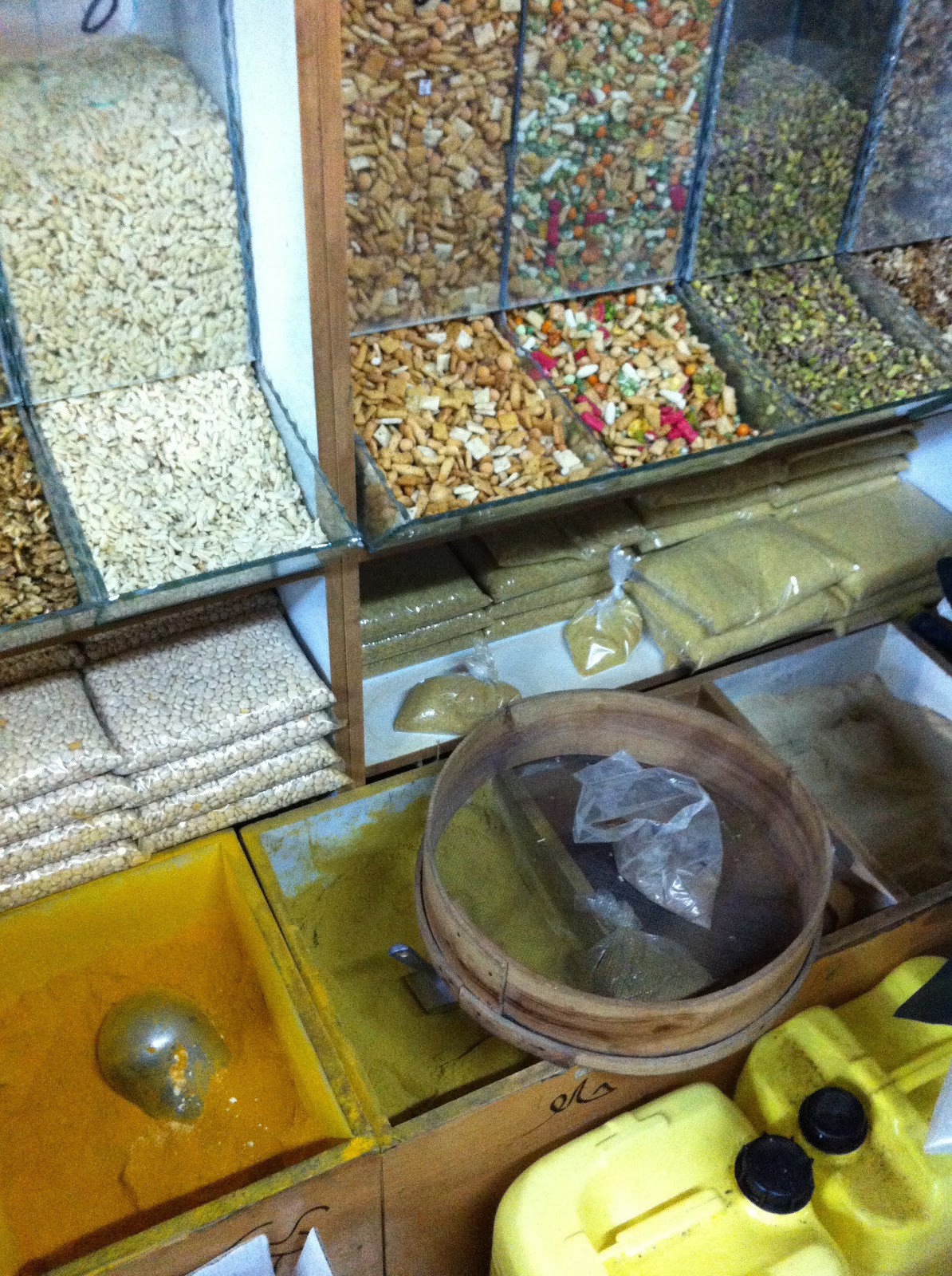
I'm engossed in high school theatre these days, trips to the gym for swimming, and getting jobs that require a completely different set of skills than I have employed the past year. In Palestine I would arrive home mentally exhausted after a day of fording language moats. Everywhere I went, I had to figure it out, or be left wanting. There was the local spice shop where I went to buy zataar--this wondrful mixture of thyme, sesame and wheat that we ate on pita bread with olive oil for breakfast, and which, with a small sip of sweet tea, set off a pop-rocky sensation dancing about our tongue. In this shop were no English-speakers to assist me through a purchase, though, so if I forgot the word in Arabic, I was left with a simple expression of need. 

Unhelpful in a room afume with spices, leafs, dried fruit, nuts and oils. 

But the young man who works there every day is friendly and understanding. He has a perpetual five o'clock shadow--a deep, dark one--and yellowing teeth. His eyes are large, but his iris is just as dark as his pupil. He has put on a bit of weight right around his midsection--not enough excercise and too much Maqluba, probably--but this is common for men who have to work ten hours a day in hopes of a wedding someday soon. His hands are thick and their tips are tie-dyed with the greens and golds of Arab spices. I ask for what it is I think I want, but he bags me a handful of da'a, or saffron, and I'm versed enough to know that what I really want is supposed to be deep green, not bright yellow. So I quickly gesture and apologize. Not that, not that...uh...I look around hoping to find what it is I am looking for; if I see it a point would break all barriers. But he's been through this before and suggests: zataar? 
Zataar in many forms
Na'am! Na'am! He knew what I was looking for and he smiles exposing his nicoteined teeth, empties the saffron back into the heep and scoops me some fresh zataar. Not an ounce of frustration does he display as he deals with my ignorance.
When I exited to the main street I would pass the furniture makers' workshop, which I honestly tried to avoid. However unreasonable of me, I would cross to the other side of the street to avoid being noticed. If it didn't work I would be beckoned in for tea and conversation. I could usually excuse myself from tea. Next time, marah jai, enshallah. But the conversation, a must. I would get questions I could understand (How are you? How is work?), and then a bunch I couldn't. These two men, one of whom was married to a Himony-so we're practically brothers-ask me all sorts of questions. I painstakingly listen for cues in tone and vocabulary I recognize. Many times we would reach some understanding of one another and smile, bless each other and move on. Sometimes I could tell that his smile was a bit pitious; he knew I hadn't understood.
The streetsweeper I'd pass next could speak English, but honestly, I tried to avoid him too. Saliva would collect in the corners of his large, cracked lips as he would tell me that he studied English in college and that it was his favorite subject and that he can also speak other languages, Oh yes, it was my favorite, my favorite subject. And you--you are Wisam. You live with the Himonys, yes--and then he would ask me if I knew Catherine, who also works at Amideast. I would answer yes every time and bless him and escape.
I was always such a Westerner on that street, but bless those men, it was just so exhausting to converse with them day after day. But my rouse would be dropped if I stepped into Ma'tam Malek, the 'restaurant king.' Here Abed worked tirelessly, waiting on tables laden with Arab spreads. His manager, Majde, spoke many English words and tried to convert me to Islam at every possible chance. It is with him I went and watched the slaughter of sheep at Eid al Adha (see blog post ...close your eyes). I enjoyed the company here, and it was less stressful in (mis)communication. 
Majde, me and Abed
In this restaurant the television is usually broadcasting the revolvings and pieties at the Qabba in Mecca. Majde is quite devout and would look up and greet me from out of his focused reading of the Qur'an. But one time I was in there watching that man attempt to break the world record for longest skydive. We sat around a table with vegetables, falafel and pita, hummus and tea stacked up and watched with excitement as he climbed higher and higher and higher. Our stomachs got tighter as the anticipation grew, but we continued eating and drinking to our full. There was laughter, grandiose conversation, wide eyes and even morbid predictions.  When he jumped we all breathed and awed and called over people who had momentarily stepped away. We shook our heads in disbelief as he fell like a meteor, felt disappointed that he pulled his parachute so early and applauded his safe, successful landing. There was a sense of envy toward such an exciting life, toward a man who escaped it all, even for such a brief moment. 
We all went on to our homes that night. I hadn't understood much more there than I had at the spice store, or the furniture workshop or on the street, but we had lived and laughed and ate together. That's good enough, really. Better, sometimes. 

Monday, February 18, 2013

...pick a size

At Starbucks I sit and wait. I am not always sure what it is I am waiting for; a call? a smile? a sideways glance or dubious eye? Perhaps just a familiar face, tanned and crinkled with too much gel atop his head. He greets me with every ounce of himself, kisses my bearded cheeks and embraces me. Salaam Walaykum! Keif inta habibi? Keif Sahtuk? Habibi. His hands are still holding mine as he exposes his eyes, naked, and undresses each one of his teeth. 

Nope. Here we grow agitated with strangers, ashamed of eye contact, dishonest with our own desires, afraid of their voice. Children play near me and a bashful man shoos them away. Don't bother the man. He bows slightly and smiles to pay for the offense. Mish mushkilla. But he doesn't understand me. He wouldn't even if I said it in English. 


I look around at the infinity of expensive choices around me. I can't help but notice that a coffee here is ten over there. But I am not sad to be home; I'm just sad that a disant and evasive horizon separates me from dari (my home)


But there is this crazy thing called wifi which has made the horizon humbler. My phone vibrates next to me and I look down to those sweet words I didn't realize I was expecting. They don't come with a smile, a hug, a kiss, but they warm me with the comforts of those things. We are planning to use Skype to "see" one another. I look out the window and see Maine, glorious Maine. Tomorrow I will look at my computer and see Palestine, sweet Palestine. What a world this is. What a world. 


My friend works behind the counter and I smile, my foot taps to meaningful music that drips with memories of those I said good-bye to. Life isn't bad, it isn't uncomfortable, it isn't undesirable. It is American, with everything this country offers. It is warm showers and choices choices choices. So I sit in Starbucks, adjusting and looking over the horizon, beyond her line in the sand, into time herself, her flowing gown and ask if I will sit someday in dari wondering about my home.

Friday, January 25, 2013

…grieve with me


Can there be joy amidst such anguish? Can we say ‘bye’ and mean it? Or are we merely saying words to pass time and friendships?

Saying bye to the Danes
Abu Monsur
A Himony passed away a few days ago, one with whom I had shared sweet time and tea. His proud kuffiya was always worn in memory of the great Abu Omar, and he delighted insharing how ‘it wasn’t always like this’ through wrinkled expressions. He had a hut on the roof of the building in which I work and sometimes I would escape up there for a warm friendship. Now we remember these moments as we visit the Himony Hall, as is custom.

Here waves of men rise and fall to greet and console. Kisses are exchanged and young Himonys run around serving dates and black coffee. Faces resemble one another, not only in expression, but in structure and detail. They are cousins, somehow, if not siblings or offspring. Here we gather on Friday for lunch, much like we do for a wedding, however this time each Himony (except those immediately related to the man who passed) pay in order to cover the cost. As I was beckoned to eat, I saw Abu Majde pay for me; he treats me as a son. Earlier I had greeted him and he motioned for me to bring a chair so I could join him. I set it in front of him and the distant Himony he was sitting next to and plopped down. Harram! Of course. Why would I put my back to people in a set-up so clearly avoiding that? I guess that in my last days here there are still things to learn, then. How interesting it is that being able to see everyone around you is so important in these moments.

But it’s all a bit surreal because my grandmother passed too, yet I am so far away from it. I learn of it in electronic notes and digital updates. This isn’t normal. And it has heaved my departure backwards two weeks, so now, as I grieve a grandmother I said good-bye to months ago and an uncle I said hello to months ago, I look into the deepness of dawning departure. It feels like a constant twilight, no matter how oddly warm it is for winter.

In lieu of this separation I visited Nablus and Ramallah, two of the big cities in the West Bank. I woke up at 4:30 in the morning to hop into a truck with my friend Mostafa and joined him as he lugged some solar water heaters to Nablus. It was a seamless ride except for the blown-out tire, which took an hour to deal with. Oh, and the random Israeli inspection, which took us deep into a settlement in order to be weighed and interrogated. I sat quietly in the front seat. When the officers asked Mostafa why his friend wasn’t speaking to them he chuckled and told them I was an American. They eyed me and then told Mostafa it was his lucky day. He got away with a one-thousand shekel fine.


Nablus was beautiful and the famous kenafe held up to its reputation. Nablus hangs between two sizable mountains like a hammok, and its residents are sprawled up and around them. One of the mountains provides a phenomenal view of the city and Mostafa and I enjoyed taking some pictures from a good spot.

Ramallah is the closest thing to a big city in the West Bank with her tall-ish buildings. The city center has a nice theatre and I went into see a play brought down from Jenin (a city up north I didn’t get to see). Though I didn’t understand much of anything, it was nice.

To sit and drink tea with Khalilis
But every time I leave Khalil, my love for her is only intensified, this time by two young Khalilis on the serviece ride home. These shebab heckled me a bit, as is their wont with foreigners. They asked me where I was from, really, and what kind of passport I hold and tested the limits of my Arabic. And then, minutes later they were asleep on each other’s shoulders as two doves on a wire. I guess we have different definitions of ‘tough.’ Sofie and I looked back and couldn’t help smiling widely at the adorable couple and feel affection for them. Yeah, Nabulsis are cool, but they aren’t Khalili; Ramallah is nice, but it isn’t Khalil. So it is there where I am spending my last, quick hours, of course.

His namesake
The last night in Khalil I spent on the brink of Palestinian land and a Settlement. The light is sparser on the Arab left of the inkiness that marks the ‘no-man’s land’ (which is really, of course, some man’s land). I ate stuffed zucchini, drank tea and coffee, got a tour of the new floors being added, and spent quality time with my barber ‘Claws’ and his family. His dad works in the Old City, right next to the checkpoint and speaks decent English from behind his more-than decent mustache.

When I got back to my neighborhood I greeted my cousin, Abed, and told him of my unfortunate news; it comes as a surprise to everyone. He was actually angry at me for not giving him and his family time enough to feed me and sit to chat over coffee. Ah. Well, a cigarette is enough, then he decided and I accepted his offer and took a couple minutes with him to stand and chat over nicotine. In ways like this, though each as different as the relationship itself, I have been saying good bye to some of the people I love the most. I feel some rising tension in my esophagus, and I am sure it shall reach some focus of emotion and turn into a rising geyser.

But I’m going out with a bang. I parted with Abed and played billiards in a cloud of Hookah smoke with some of my best friends, Ihab, Noor (whom I’ve named Jag) and Mostafa who tell me how much they love me. When Jag found out I was leaving he responded “Well I’ve got to buy you something!” How Arab of him. He came over that night with a nice gift to remember him by: a piece of wood with a message carved into it. I embrace them, we kiss and bless one another, and then say until next time. I walk away warmed from love, cooling with distance.

And for my final day, the plan is to eat maqluba, the most Khalili of meals, at my first home with Abu Majde and his family. And then to begin the journey westward…

So, yeah, there is joy in these good-byes. Great joy. My heart is overwhelmed with love, my imprint on this place is satisfyingly noticeable, and the imprint of this place on me, satisfyingly permanent.

Abu Majde and I


Saturday, January 12, 2013

…prepare for war


Well, there has been more fighting in Khalil, but you probably haven’t heard about it on the news. The entire city has erupted into war; men, women, children, all are fighting. And there isn’t one Khalili who wouldn’t find some pleasure in nailing a foreigner with good chuck. My friends and I are highly prized targets; it isn’t safe out there.

Each time I step out of my apartment I must prepare for war. My roommate David and I strap on gloves, wrap our heads in our kuffiyas and fill plastic bags with snowballs. See, an a’sifah has descended and covered the city with beautiful, sweet, peaceful snow. And everything has shut down (except the bakeries, of course). It means snowball fights and long cozy days (if you can get cozy in your icebox). No one goes out for any other reason.

Snowbride
If you can imagine it, I am not kidding. My neighborhood thunders with squeals and shouts of puffy militants. A delight has fallen with the snow and we cannot walk for ten minutes without greeting and joining any number of battles. You don’t have to know anyone to roll a tight-packed grenade and lob it into the fray. In fact, if you aren’t careful you may be the victim of some strong arm. And you don’t have to know who it belongs to. It is the absolute fruition of a winter wonderland. Snowmen, snowbrides and even snowtanks have risen into form.

Armed and ready
David and I needed to visit our friend, so after arming up, we plowed through the enemy defenses, wielding our makeshift machine-guns. But we only made it through one line of defense, one battle, before we were faced with another onslaught of artillery. Despite my kuffiya’d attempt at concealment, a shout arises “Hada Simon!” and our cover’s been blown. Everyone seems to forget past woes and unites under one purpose: destroy the foreigners. Occasionally we get an ally, but they usually defect fairly quickly and we even get backstabbed by malicious smiles and batted eye-lashes. It is a war, albeit one fought with smiles and laughter. In the slue I see someone I don’t recognize. “Dar min inta?! Himony? Ana keman!” My plea for brotherhood gives me some air and I use it to run. Wet, panting and laughing we escape to the street, leaving the fog of Himony battle behind.

Escaped and proud
It has been a good year so far, and a welcomed change from the constant and cold rain. New Year’s Day was quite fun as well. It arrived with a Danish welcome: I jumped off a piece of furniture “into the new year” and greeted it with hugs and well-wishing and some secret champagne. A delightful feast and a failed cake ended twenty-twelve. The Danes made a lasagna extraordinaire, I made the cake; I think my kitchen-luck expired with that turkey…

At three in the morning I was able to see my family through the internet and tell them how twenty-thirteen felt, since they were still in old time, and I spoke a sweet promise. See, I couldn’t sing it for the holidays, but I decided a remix would do: I’ll be home for Valentine’s Day, you can count on me, for I am returning to the States in February. My mother, of course, did a bit of a dance not unlike the ones she does when she shows off the food she is cooking. I smiled and we talked about what life will look like this year, as is custom on the first.

But it is more bitter the more sweet. I may be excited for Dunkin’ Donuts, but my coffee will be glaringly American; I may be anticipating old friends, but my conversations will be dreadfully English. So, as I did with my family, I do with my friends, though this time I emphasize the bitter. My news that I must leave is usually greeted with wide eyes, questions and sweet words of sadness. But I know I’ll miss them more.

And as we do at the heads of years, and especially in seasons of partings, I looked back to see what trail I blazed, and was almost shocked to realize it was a year ago I first stepped foot on the holy land and first inhaled the tense, Mediterranean air. And so a truth I was told in my youth has proved itself again, and I found it to be ugsome: the puissance of time is indomitable, and I am merely a pawn.

Goodness, that was a bombastic sentence, for, let’s be honest, the influence of time is what’s really unstoppable, and I am powerless to do anything about it.

Struttin' in style
The streets of Bethlehem play this poetic part in this whole adventure of mine, and I’ve been on them a lot lately. The Orthodox celebrated Christmas on the 6th and 7th and I was able to attend the midnight service. And so once again I was able to observe the birth of Jesus, though you don’t have to enter the church to do so for it is in decorations all over Bethlehem this time of year. And I remember walking down Manger Street a year ago, in full rebellion of the touristy funnel gimmicks, where my love for Palestine was birthed, and how it swelled when I bought dates and oranges in Ariha (Jericho) and took root when I visited the Israeli-Arab town of Nasrah (Nazareth) where great churches commemorate the immaculate conception, though I ignored them for the immediate connection with some Palestinians.

Waltzing down Manger Street
So I visited Stars and Bucks and was able to speak with my friend there, the first Palestinian I jawed on the first Palestinian street I trod, and I told him of his place in my great story. I did not spare the details: I was standing there partly due to him. He beamed with importance and I bought a Mocha.

And I was blessed by this much more than the service, for he is why I came: the Palestinian who goes to work and speaks Arabic and smiles in such a way that I cannot understand. I didn’t come to go to church. So I find myself in the living room of Abu Noor, with his wife and children laughing, enjoying a gas heater and whatever we can find on YouTube, whether Arab music or American, or some Saudi insanity or Palestinian patriotism. And we learn and share and stumble through translations and stories. Here I am always welcome as a son, and it is the room that is most sweet, where I make deep-contact with sparkling irises, eat delicious food, and regret my plane ticket in the quiet places of thought.

Cozy dar Anwar
Last week we watched the Nativity Story with Arabic subtitles to see how the Christian version of the Christmas story goes. Anwar agreed that it was “too similar to Islam.” And by too he means very, though he can’t seem to get that one down. I spend most of my time here at Abu Noor’s. If I have weeks left, I will get as much out of them, for in this way I prepare myself for the great battle with depression that I will face when I cross the Atlantic. I have sworn to myself not to let the days pass without engaging with that which I am here for: the Palestinian who goes to work and speaks Arabic and smiles in such a way that I cannot understand. And now, after living here, I cannot forget it either. And I won’t. I will study Arabic, find Arab friends, and never forget what I have seen and heard and who I have met in this bittersweet land. Those are my New Year Resolutions. Those, and going to the gym, of course.

Wednesday, December 19, 2012

…distinguish between the one


This is a land of collisions. For centuries it has housed the great crossroads of three entire continents, Europe, Asia and Africa, and still displays the tread from the wheels of ancient trade. Even ideas, entire religions, began and expanded from these sacred hills. Not without reason has Jerusalem been referred to as the center of the world.

A picture from Google of his final day

But there are many kinds of collisions in the Holy Land besides accidents of Pangea. There are the clashes between nationalities, where lives are at risk, and often taken. Last week Hebron suffered again the loss of a young man. In the excitement of not only his birthday, but also the twelfth day of the twelfth month of the twelfth year in this millennium, Mohammed, a newly seventeen-year-old was shot several times by a young Israeli soldier. The news reports conflict: was he shot 3 or 6 times? Was he holding a toy gun? Or was it his birthday cake? Was he hard of hearing or ignoring the soldier? As of yet, we are only sure of one thing: that the day of his birth has become the day of his death; this collision’s become so costly.

Tree's alit!
But some collisions aren’t always so, like the community of religions here, where Muslim and Christian live side-by-side, and worship similarly. In Bethlehem the toll of bells and call to prayer both color the air with hymn. I attended a large tree-lighting event in Manger Square, and in the middle of the mayor’s speech a loud call to prayer echoed from the tall mosque behind us. There we waited for the religious man to finish his duty before we continued our quite Christian tradition. In all of Palestine, the twenty-fifth is a holiday, as are the Muslim holy days, and well-wishing a ‘Merry Christmas’ is almost always returned with smiles. I spoke with my students about this brotherhood and was reminded of the sweetness in it from a shared story. One of my students works in Bethlehem and all his Christian colleagues fast at work with their Muslim friends during Ramadan. For many parts of the world, these two peoples cannot seem to live next to one another, but it is not so as they collide here.

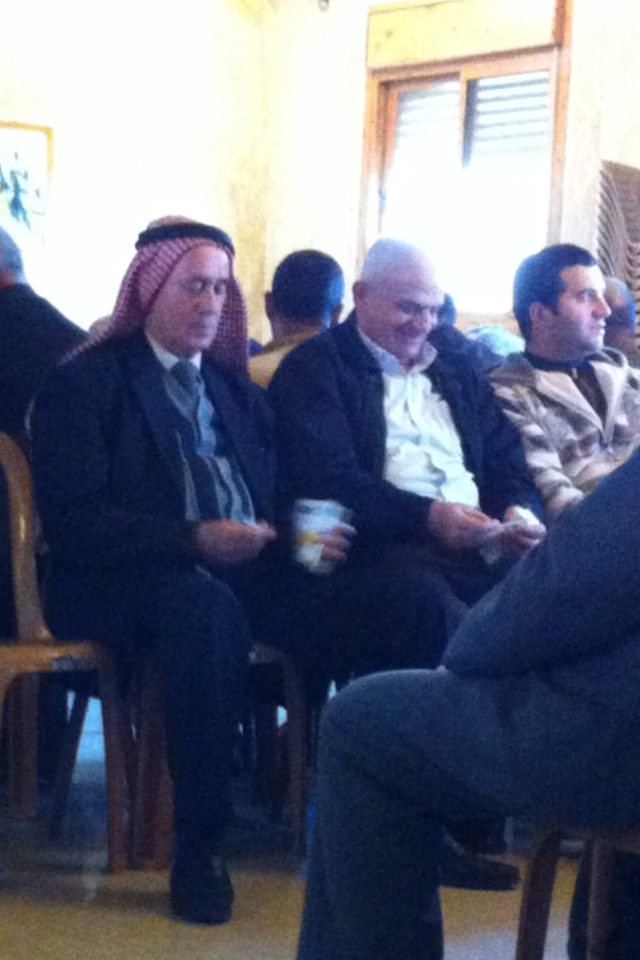
There is a collision of eras, where the contention between modern and ancient can be both humorous and frustrating. I’ve been to many celebrations of engagements, marriages or graduations, and they all look quite similar. There is a silliness of grown men and their sippy cups and juice boxes. With traditional headscarves they arrive from this age’s past; slurping juice, they come from their own. But it is normal here, as we sit and chat and shake hands in celebration of love. A man absentmindedly clinks his car keys and stares off into some remote memory of his own love-life. Others toke on their cigarettes. Still others use their cell phones to call over their friends from the other side of the hall. Past and present collide here like tides in transition.
 
Then an important man quiets the crowd and begins the prayerspeak, where Allah and Islam are celebrated first, the marriage second, the families third and Allah again while they open their palms face up and pray. In tight jeans, leather jackets and waxed hair or long robes and beards, they all simultaneously lift up their hands, then bring their palms down over their face to seal the prayer. I sit quietly and make note of the people who wonder who I am and why I’m not joining.

For these traditions are deeply rooted in both culture and religion, and are not frequently ignored. And it has been that way for so long, but with smart phones in hand, a connection with the West has been tied, and where once the negative influence of the modernizing West was successfully quelled, now it is united with one of those knots tied by the ignorant that never undo. Hence the contention. I see the frustration in the eyes of young men who wish so badly to have a girl at their side, but know it is actually impossible outside of an expensive, almost unattainable and altogether too permanent marriage. In fact, their despair is quite the focus of their days, for its forbiddenness makes it consuming. And so we find ourselves here, celebrating yet another young man’s ‘ultimate’ success. And the man with his keys thinks of the woman he loved but couldn’t marry while my friends think of the girl they know they’ll never even kiss, and look at me with a certain envy for not being governed by the same social rules. But we snap out of it to join in a more immediately satisfying tradition: to chow on some incarnate pastry, both fully dough and fully sugar…

Likewise, as Christmas draws near I think of one more collision, one I see within my very self: the coalescence of what I was and am, and what I’m becoming and have become.

I was at church the Sunday after the UN’s validation of the Palestinian State and I was wearing my kuffiya for both warmth and in pride. There a man greeted me, kissed me and looked at the scarf.

Love the Kuffiya
“Ah, now you are Palestinian” he said. I smiled and thought for a moment about how I must be if I just accepted a kiss from a grown man. And then I looked back at him and replied,

“And now you as well, my friend”

But it isn’t just the scarf that makes me Palestinian, just as one vote doesn’t change who these people really are. No, the fact that I am becoming Palestinian was most notable a few days after Thanksgiving when I was eating some leftovers at home. Here people seem to eat pita bread with everything: breakfast, lunch, dinner, vegetables, meat, other carbs, hummus, everything. And I like to think that I haven’t adopted this habit, if only for the health reasons, but then I look down and realize I’m using it to eat stuffing. Stuffing. I was stuffing pita bread with pita bread. And eating it. What have I become?

But it doesn’t rest there. Even walking arm-in-arm seems natural, like I’ve been doing it my whole life. Once I absentmindedly stuck my arm in the elbow-crick of my American friend before we both made weird eye-contact and separated. On the rare occasion that I see a foreigner walk by, I stare, wide-eyed, as if I’m at the zoo, with the question why? on my lips, before I’m caught by a Khalili for being so, well, Khalili.

 
I remember the first word I ever learned here: habibi. It means something like ‘my lover,’ but is used for so much more. It has a certain flexibility among the Palestinians, but a subtle one found in how you say it. You can look at your wife and say Habibi. It’s like any other term of endearment: you say it with earnestness. Easy. Then you can see your good friend and greet him. Habibi! You hit the ‘H’ a bit harder in this one, and drag the rest of the word out a bit. It becomes endearing and affectionate. Not too hard. Well, then you can run into a stranger and ask him to take your picture, or something. Bidi ishi. I need something. Habibi. This one comes after a few words have been exchanged and he is ready to take your picture. Or something. His payment: being addressed as such. It isn’t rocket-science, but it requires a bit more finesse. But then you can use it to say thank you. Down the street and to the left? Habibi. This time it flies out quickly, like we might say ‘thanks.’ If you want, you can even use it with hints of sarcasm to mean the opposite. Habibi. I don’t like you. Please leave. I, of course, have no need to ever use it this way. But perhaps the most exclusively native way of using it is in accepting a complement while simultaneously saying you’re welcome.

I was speaking to someone the other day and he called me his Maine Man for the help I was providing him, and, of course, the place from which I come. Then he complemented my work. My immediate and completely natural response: Habibi.

We paused for a moment and looked at each other. Then, on the brink of continuing our conversation, we were interrupted by our own simultaneous laughter. It was really funny and we didn’t need to say anything for we both understood. “You know,” he said to the others in the office, “his habibi is, like, perfect.” My response of course: habibi.

But this collision of identity, this coalescence of two-in-one, draws me back to the message in the music I so nostalgically listen to these days. It is what we are celebrating now, both in the West and here, where it all began. It is Him, a man of two identities. Despite what you believe or the traditions you practice, Christmas is about a being who was God and still is, and is becoming and has become a man. But our focus lies not just in his birth, for we celebrate a man who was born to die, and so my thoughts drift back to our late friend Mohammed, and I feel a certain sorrow in such a collision of fate as theirs. 

Wednesday, November 28, 2012

...be thankful


You all saw it on the news: Gaza and Israel at it again. And many of you sent quick notes to me, checking in on how I was. I appreciated that. It was a strange night, when it all began. I was in Jaffa, a city just south of Tel Aviv, when we first heard the rumors of war. My friends David, who left for America a couple of days later, and Ditte and Sofie, the Danes, were all dressed up and going to see the new Bond movie, Skyfall. At dinner we chuckled uneasily about the all-too appropriate title to that movie.

Tel aviv, from Jaffa
The next night was interrupted by tremors of war as rockets missed their mark, or sputtered out early, and landed in the Mediterranean nearby. We thought we might go dancing, but the mood sort of died amidst the already-growing suffering.

The week passed like a fitful night of sleep. Even the weather groaned and tossed and turned…nothing was at ease. Every day we counted the fresh graves with solemn souls. At night I heard the firing of gas or sound or light grenades as people threw stones at Israeli soldiers, and they responded. The unrest has stretched into the West Bank and many people joined Gaza by strike, by stone, or by prayer. 

Imagine the honking
The greatest of all the shocks in Hebron was not from a stray missile, though. No, we were hit hardest and closest when one of our own was shot and killed in the street, amongst his brothers. The pictures and phone-recorded clips found their way to YouTube and Facebook instantaneously; I saw grief I have never known, blood I’ve never seen shed, and it sunk heavy as stone in my heart. This was no news reel—this was a friend of a friend who lived down the street. I could have seen him, perhaps purchased something from him. His hands were Khalili, as are mine, and as I type this, I know he never will. The grief was overwhelming, and it carried him through the street the next day, held aloft, proudly, in a bed of wood and covered by the colors of Palestine, black, white, green, and red. Here is our martyr.

Two days later I sat atop a high place in Hebron and overlooked the hills in the shadow of war and approaching night. Lights shivered in the distance: that was Gaza. A flare in the darkness was no celebratory firework, but a presage of grief. I found myself in a coffee shop later, joined by foreigners and Palestinians alike. We wondered with shaded hearts what tomorrow would bring. That a ceasefire was being discussed behind doors where lives are saved and wasted, we knew; that the ceasefire may not work, we feared. As we looked out to the street and watched the parade of honking fury pass below, we acknowledged that our time in Hebron might be cut short. We looked at our Palestinian friends who sat among us, whose hospitality we had so generously been recipients of, whose love for one another bled even for us, who had known them for so little. Could we leave? Must we?  

We will if we must.


The anxious gathering
And with that we saw to our homes for another tormented night.

I woke up on Thursday to a strangely golden room. There was an afternoon’s light bursting into my room and I fumbled for my watch to answer a question I knew to be impossible: was it still morning? It was. I ventured into my kitchen and looked out the window. Away in front of me a tall mosque thrust itself into a sky so golden and overcast I felt uneasy. There was something apocalyptic about it and without internet or television to inform me, I feared the worst. But I had to prepare a pancake breakfast for the Danes and my two roommates, as promised.

I noticed something, here. In all this turmoil I saw many people who fought, many who cried, and many who stood, stone statues of old kings besieged, but untoppled by breaking crests. And in every moment I only thought about food. The day before I had kept my friend company, making pancakes to fill her worrying mind and body. I prepared coffee and small snacks for my roommates, and in doing so, I suppose I felt human in something that can confuse even that foundation. 

My roommates creaked out of bed slowly, with joints unoiled, and Ditte and Sofie arrived while I built an impressive stack. The girls have internet at their place and so were bearers of great news. Besides the fact that Ditte had all week been in Jaffa, alone, and had just arrived yesterday in Hebron, the ceasefire was successful. We celebrated over starch and brown sugar, and it was a Dane that first said ‘Happy Thanksgiving!’ And so it was.

The sun came out in full glory that day, and most of the morning and afternoon was spent joyfully doing errands. I had planned to prepare a traditional meal for some of my friends here, but the whole conflict had closed roads and checkpoints and raised tensions in many places, including Jerusalem, where I needed to go to purchase some important ingredients. Now, with rocketless skies, I made the trip into the holy capitol. I was looking for one rumored store in a place called Beit Hanina that apparently sold pumpkin puree and who knows what else. But I had no idea where it was, except that a stop on the train in Jerusalem was called Beit Hanina.

A half an hour of walking after I got off the city train I finally found Jafar Supermarket. I was in an Arab town between Jerusalem and Ramallah at this point. Two hours prior I had left Hebron, and when I didn’t find pumpkin puree there, a flicker of frustration caught flame. But I found sweet potatoes and butternut squash instead, so I grabbed some with my other groceries. However nice this small market was, I grumbled for I could have bought these things most anywhere in Jerusalem at least. So I started my trudge back, but I had scored little that I came for, and I was still turkey-less. I had thirty minutes of walking and I knew I had passed a couple butcher shops on my way. I walked into the first one.

Salaam alaykum. Ainduk deek rumi? 
              (Peace be upon you. Do you have turkey?)

La. Djej, bas. (No. Only chicken)

Ah. Shukrahn. Yatik Allafiya. Salaam. 
              (Ah. Thanks. God bless you. Peace.)

Shop number two was the same, but third times the charm, as they say, and soon I was on my way with the smallest turkey they had: a 20 pound doozie. I actually called a friend of mine to get a second opinion. Was I really about to purchase a toddler of a turkey and attempt to cook it? And they sell by the kilo: this was no cheap steak. She cleared my head with strong affirmatives, and so I paid and left, heavy laden with a long road ahead.

The Danes had joked earlier that I should buy the turkey in Jerusalem and travel home with this frozen hunk of meat under my arm. I wasn’t laughing as their premonition became all-too true. I initially had a frisson of excitement, but soon my breath swam away in front of me as my arms ached for breaks they could not have. My legs stung and my left shoe began to dig away at my Achilles. I made it back to the train and knew the walking was over. But it was not. In less than a short hour I was standing by the road outside of Bethlehem wondering where all the shared taxis were in this fallen darkness. At this point I did not laugh, but sneered inside at the fact that my groceries had depleted all my cash save barely enough to get home. I couldn’t afford a taxi from here. I looked away down a dimly lit road where I knew I could be led to the main street in Bethlehem. The problem was, it was a few miles down that road. But twenty minutes of thawing turkey made up my mind and I started off. The familiar aches, stings and groans of my body quickly resurfaced and I found myself whimpering in pity.

She finally made it home. Subsequently, she lost her head.
But on I walked motivated by some apparition of a brown turkey before wide eyes that I had conjured, and I was determined to see it through. I revisited every prideful act I ever committed those miles of the night, and was strangely strengthened by them. I would see this bird to the stove, and my spent arms couldn’t wail loud enough to stop me.

I had been 5 hours from Hebron by the time I reached the main street, and I could only pitifully deplore this white man who stumbled out of the darkness with full bags into the usual going-ons of the neighborhood. It was some divine gift that brought me a car less than ten minutes later. The driver recognized me, and took me to Hebron and the whole way I sat in the back, on brand new leather seats, fearfully cradling the dripping turkey in my lap. I reminded myself that it was thanksgiving, and so I counted things I was happy for. A ride. A turkey. Absorbent jeans. When I finally got out of the car, I looked as if I had wet myself, but I saw no gleam on the seat. Alhamdulillah. Thank God.

Palestinians with Pies
The day ended weeks after it began. I had done some surgery on the bird, disrobed her, spiced her, and tacked her skin back on before putting her in the fridge. Then I walked home and fell into sleep. And the night ended only minutes after it began. Soon I was back at the Danes’ place, improvising some pita bread stuffing, and getting the bird a-cooking by ten-thirty. I had never done any of this before, but I felt confident…for some reason. I spent the entire day cooking and preparing. The stuffed turkey was in the oven, the potatoes were ready to be mashed, the pecan pie and butternut squash pie were ready to go in once the bird was out, vegetables were cut for roastin, the cans of cranberry sauce eager to be opened and served, salads on the verge of being thrown together, flour out and ready to become gravy in her marriage to turkey juice, and then it all happened; the puzzle began to take sudden form. 
Though it was all a bit impetuous I was proud of the table that was laden. Two Danes, two Aussies, two Palestinians and I all sat down and feasted. Only two of us had ever known this meal before. Even the Arabs kind of liked it, and they are not known for their tolerance of different foods.

And with a bit of wine in me, and the merriment of company filling all the spaces within me not already occupied by tender meat and perfect pies, I slept well on the couch, and I was quite thankful. We had all agreed at the table: this was one to remember, with Gaza quiet, the air still, and hearts and stomachs full. Happy Thanksgiving, we said. And indeed, it was.


Oh, he beems with pride